We talk a lot about longevity these days. About blood values, muscle strength, sleep tracking, blood sugar, supplements and prevention. All of this is important. And yet there is one area that is still underestimated in longevity medicine, even though it is involved in almost everything: our gut.
Because healthy ageing is not only decided in the large organs, not only in the heart, not only in the brain and not only in the muscles. It is decided to an astonishingly large extent in that inner living space in which digestion, immunity, metabolism, nerve function and inflammation regulation are closely linked.
When the gut gets out of balance, we often feel this unspecifically at first: more bloating, more tiredness, more food intolerances, more cravings, more sluggishness, less resilience. Sometimes skin issues are added. Sometimes sleep problems. Sometimes a diffuse feeling that the body no longer reacts as clearly and easily as it used to.
This is exactly where GUT AGING begins.
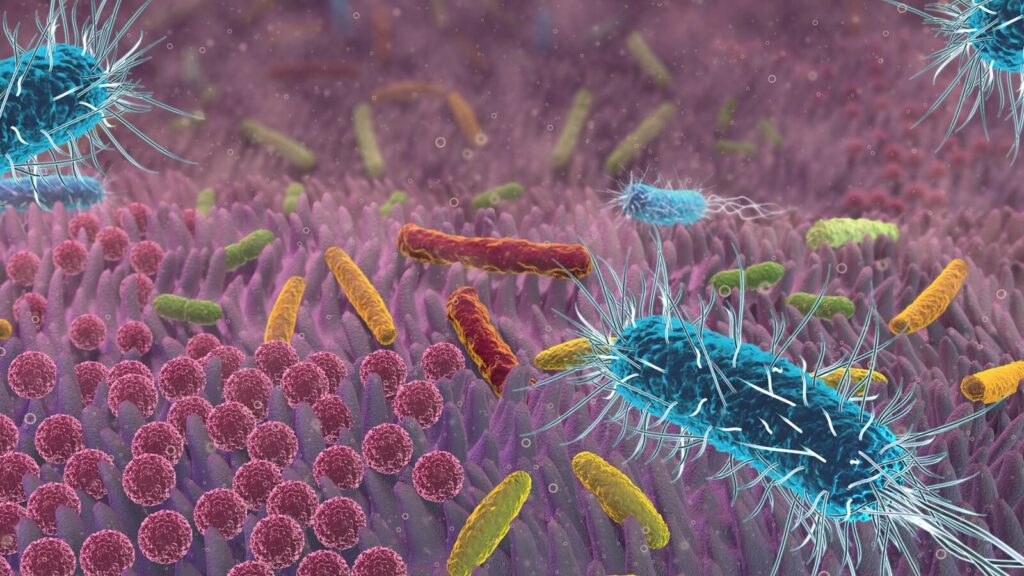
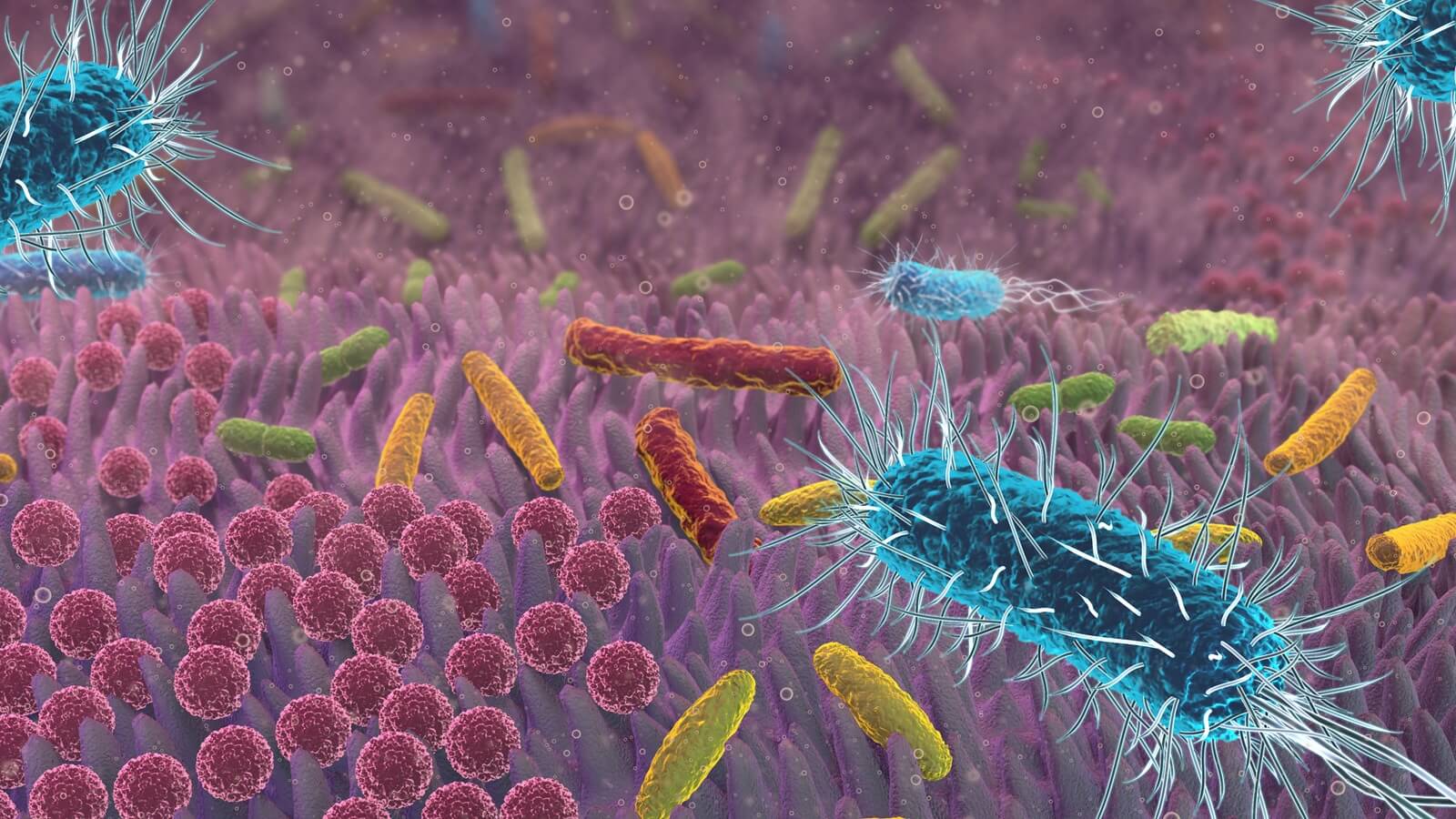
The intestine is much more than a digestive tube. It is a highly active interface between the outside world and the inner world. It processes food, trains the immune system, produces and influences messenger substances, protects us from unwanted substances via its barrier function and is in close contact with our nervous system via the gut-brain axis.
This system changes with increasing age. The diversity of the microbiome often decreases. Protective bacteria become fewer. At the same time, the tendency to inflammatory processes increases in many people. The intestinal mucosa becomes more vulnerable, the barrier more permeable and digestion more susceptible to disruption.
The result is not just a „sensitive belly“. The result can be a condition that modern research describes as chronic low-grade inflammation - a silent inflammatory process that accelerates ageing and is associated with abdominal fat, insulin resistance, fatigue, neurodegenerative processes and muscle loss.
The gut is therefore not a marginal issue in healthy ageing. It is one of its key factors.
An exciting idea from recent microbiome research is that it is not only our calendar age that is decisive, but also our biological age. Two people can be the same age - and yet age completely differently.
We see this in practice every day. One person is agile, clear, resilient and internally stable at 62. The other, at 62, already feels tired, heavy, irritable, inflamed and alienated in his body. There are many reasons for these differences. One of them lies in the inner environment of the gut.
A diverse, stable microbiome appears to be closely linked to resilience - the ability to absorb stress, regenerate and remain in balance. And it is precisely this resilience that is one of the most important markers of healthy ageing.
At the centre is the intestinal barrier. It decides what is allowed through - and what should stay outside. If it is intact, it works quietly and reliably. However, if it is disrupted, bacterial components and incompletely processed substances can enter the circulation more easily. The immune system reacts. Inflammation increases. The organism goes on alert.
Many people think of inflammation in terms of acute, severe symptoms. But the greater danger in the context of ageing is often the quieter processes: a little more irritability in the system, a little more oxidative stress, a little less regeneration, a little more water retention, a little more abdominal fat, a little less clarity. Not dramatic overnight - but noticeable over years.
That's why gut health is always also inflammation regulation. And inflammation regulation is longevity medicine.
Short-chain fatty acids, especially butyrate, play a special role. This substance is produced when good intestinal bacteria process fibre and resistant starch. Butyrate has an anti-inflammatory effect, strengthens the intestinal mucosa, supports the sugar metabolism and even appears to have protective functions for the brain and nervous system.
This is one of the reasons why a gut-friendly diet is so much more than just „eating healthy“. It's not just about calories. It's about what we feed our inner ecosystem.
The following are particularly helpful:
What we reduce is just as important:
What is particularly important to me in holistic longevity work is that we must never look at the gut in isolation.
A disturbed microbiome not only affects digestion. It also affects mood, energy levels, stress management and cognitive clarity. Conversely, chronic stress, lack of sleep, inner restlessness and constant emotional tension in turn alter intestinal function.
The connection to muscle is also highly relevant. Healthy muscle mass is one of the most important longevity factors of all. However, muscle building and muscle maintenance are less successful if the gut is under inflammatory stress, nutrients are not optimally absorbed or the system is chronically imbalanced.
Healthy longevity is therefore always an interplay of body, psyche, regulation and everyday life. It is precisely this combination of physical health, mental balance and inner coherence that is also part of the basic understanding of our two brands ARSVIVA and EURASIAMED.
From an Ayurvedic perspective, stable digestion is also a basis for vitality, clarity and regeneration. The terms Agni, Ama and Ojas still offer an astonishingly useful model for this: strong digestive power, as little stressful residue as possible and the development of inner resistance.
In a modern longevity context, I would translate it like this: What is well digested, well regulated, well excreted and well integrated relieves the organism. What stagnates, inflames or chronically irritates the system accelerates ageing.
Ayurveda does not provide a counter-world to science, but in some places an astonishingly intelligent addition to the modern system view.
The first step is often easier than many people think: regularity.
The gut loves rhythms. It loves peace and quiet when eating. It loves real meals instead of constant snacking. It loves movement. It loves sleep. And it loves it when we are not constantly in stress mode.
These five principles are often particularly effective in everyday life:
Eat more fibre-rich and colourful food.
Incorporate fermented foods in small, easily digestible quantities.
Allow real digestive breaks between meals.
Exercise daily and train your muscles regularly.
Take chronic digestive complaints seriously instead of normalising them.
Herbal support can also be useful - for example triphala, curcumin, berberine or targeted pre- and probiotics. However, it is important not to use such products across the board, but to use them in a sensible way. Not every gut needs the same thing. And not every „intestinal cure“ is automatically helpful.
It is often worth taking a closer look, especially if symptoms have been present for a long time, abdominal fat is increasing, exhaustion, intolerances, stool irregularities, skin issues or inflammatory stress are added.
As part of the Longevity Consultation, ARSVIVA expressly describes further diagnostics as a sensible and moderate part of a holistic concept. Depending on requirements, this also includes laboratory-based examinations of Microbiome and gut health. The initial consultation combines medical history, physical examination, stress tests, bioimpedance, HRV and an evaluation along the Longevity Wheel; additional laboratory analyses can then be recommended.
We can do a lot for healthy ageing. But we shouldn't just think about visible markers. Not just skin, weight or fitness. But also those silent systems that decide how we age in the background.
A healthy gut often means more than just better digestion. It can mean more energy. More lightness. Less inflammation. More metabolic balance. More mental stability. More regenerative power.
Perhaps that is the real message of GUT AGING:
That we don't just have to fight or optimise healthy ageing.
But to understand.
Accompany.
And strengthen from within.
If you have the feeling that your digestion, energy, abdominal fat, tendency to inflammation or general resilience may be linked, a well-founded analysis may be useful. In the Longevity consultation by ARSVIVA / EURASIAMED After a detailed initial consultation, the patient can also be given a Analysing the microbiome and gut health be integrated into the overall concept - not routinely, but in a targeted, measured manner and tailored to your individual situation.
👉 You can find out more about the Longevity consultation and request an appointment here: